

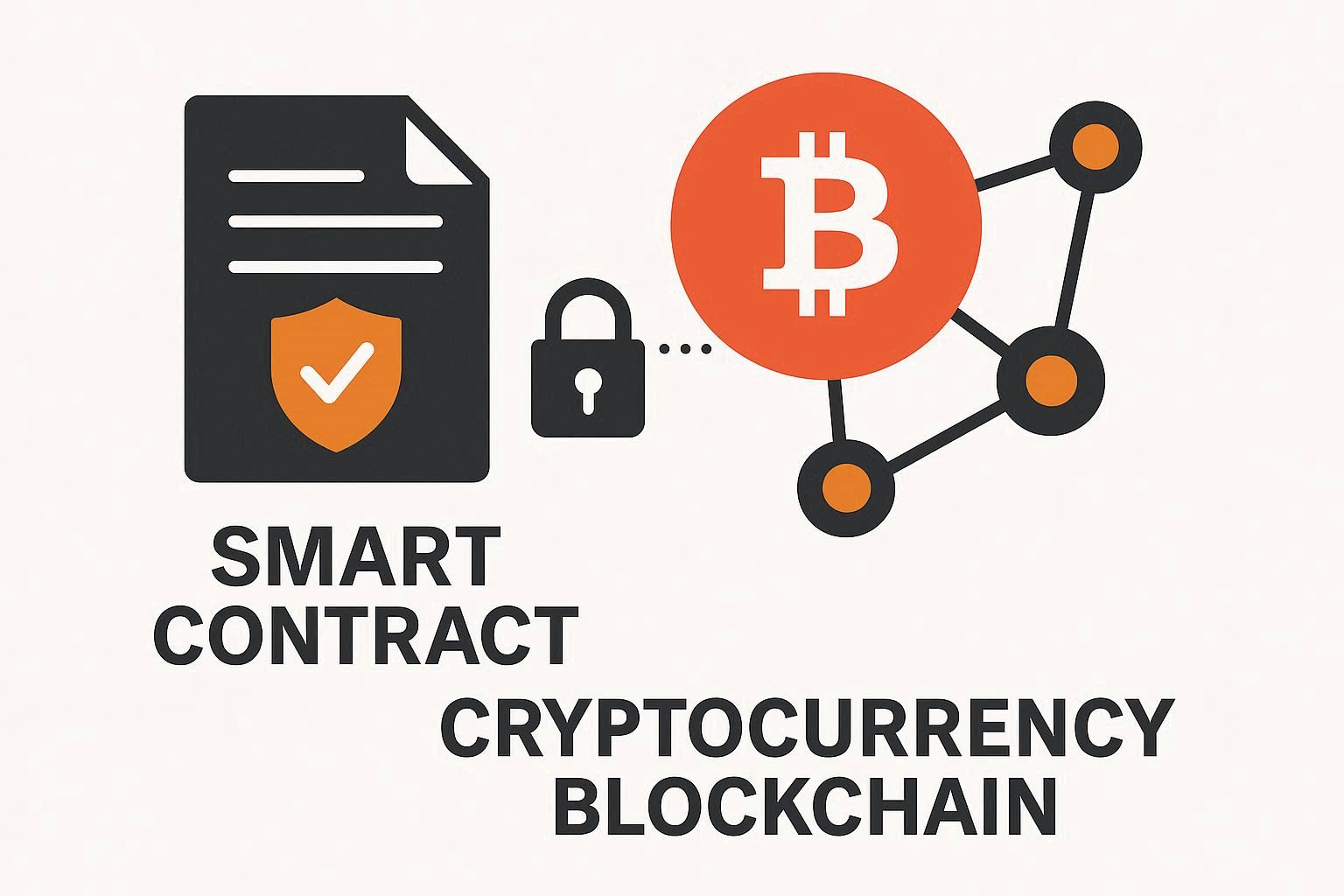
What Is the "Smart" Factor of Smart Contracts?
As we all know, contracts are pre-determined agreements between two parties or more. This concept also applies to smart contracts. However, they are much more efficient.
Smart contracts are agreements with terms and conditions written in code. They are stored on a blockchain to automate the execution of the agreement technologically. Therefore, they ensure a rapid and pre-determined outcome. Smart contracts are embedded in decentralized blockchains, are impossible to alter, and do not require the interference of an intermediary.
Here are the reasons why you should consider using smart contracts:
1. They are autonomous
As mentioned before, smart contracts do not require centralized organizers.
They are independent, automated processes that happen with no third party interference. These contracts are programmed to execute the processes of the agreement semi-automatically. This directly excludes the pains of many long and costly business processes, arbitration systems and value transfer systems.
2. They are trustless and secure
Smart contracts enforce the terms and conditions of the pre-determined agreements with no complications. The pre-written codes deterministically carry out the needed transactions between the involved parties with no temperament or delay. Hence, highly secure.
Consequently, it is necessary to carefully audit, and make sure that there are no errors in the logic of smart contact code. Security experts can verify if there is any errors before deploying the smart contract onto the blockchain.
Once the smart contract’s logic is correct and precise, the processes run on seamlessly. It is also important to note that blockchain transaction records are encrypted and is impossible to hack with current known technologies. However, the code of a smart-contract can be exploited, this typically occurs when a bug is overseen which can lead to a large loss of capital.
3. They are cheaper and faster
As you know by now, smart contracts are not only reliable, but pretty fast and efficient. They remove the long processes of applying the terms and conditions of the agreement. As a result, they also remove their costs!
This lightweight coding replaces the functions and the costly procedures of institutional intermediaries such as banks and insurance companies.
Automated, fast, cheap, and secure... Here’s an example that will help you concretize the benefits of these transactions:
Imagine that the airline company cancels your flight in the last minute. Fortunately, a smart flight insurance contract can directly determine whether you should get a refund or not. In case of a canceled flight, the smart contract will directly refund you if the terms and conditions applies. Thus, you don't need to go through an insurance company to evaluate your claim. And most importantly, you can avoid diving into the rabbit hole of investigative procedures.
 ## So, how are they created, and how do they work?
Creating a smart contract begins with a collaboration between a party and developers who agree on the desired performance of a specific smart contract in response to certain pre-determined events.
After agreeing on the behavior of the smart contract, developers start creating the logic of the contract. After finalizing the coding of the contract, they hand it off to a second team of developers for a final security review. When they approve on it, the contract usually runs on an existing blockchain.
This smart contract could start receiving updates from cryptographically secured streaming data sources known as “oracles”. Once it receives the pre-determined mix of events form one of these oracles, it automatically executes its response.
The aforementioned method, is a very idealistic way of creating smart-contracts. The truth is, anyone can create a smart-contract capable of doing anything! For this reason it is important to always verify the smart-contracts you are using.
How many types of smart contracts are there?
There are 3 types of smart contracts:
- **<strong>Smart** Legal </strong>**Contracts ** Smart legal contracts are legally enforceable. But, they require the participating parties to fulfill their obligations in the contract. Otherwise, they may have to face strict legal actions against them.

- **Decentralized Autonomous Organizations (DAO) ** <a href="https://resh.community/dao-democracy-the-only-leader/">DAO</a>s are blockchain communities that follow very specific rules encoded into blockchain contracts, allowing it to govern itself. In other words, self-enforcing codes replace any action taken by any of the community’s members.

- **Application Logic Contracts
** Application logic contracts comprise application-based code that is always in sync with other blockchain contracts. They allow communication across different devices.
What Makes Them Secure?
- **Cybersecurity and Security Audits**<br role="presentation"> Security audits are processes that offer detailed analyses of any given project’s smart contracts. They are very common in the Decentralized Finance (DeFi) ecosystem; they provide reports detailing any unresolved errors to report performance or security issues.

- **Immutability and Blockchain**<br role="presentation"> Smart contracts usually go live on blockchain because of the blockchain’s secure and immutable nature. Therefore, storing smart contracts on blockchain is pretty safe and secure. Contracts are encrypted on a shared ledger, and it’s very hard to lose information that is stored in blocks. Blockchain technology also offers flexibility since it allows developers to store almost any type of data. And most importantly, these contracts allow the creation of a database that keeps track of property titles.
Exchanges, Smart Contracts and Blockchain
Transfers and transactions on blockchain occur in 5 chronological stages:
1. Transfer Initiation
The parties involved in the transaction deploy the smart contract and they initiate the transaction. They could be exchanging any digital unit of value.
2. Block Formation
The initiated transaction is packed among other pending transactions, and together: they form a block. Then, these blocks move to the blockchain’s network of participating computers, known as miners in the Bitcoin blockchain.
3. Verification
This is where smart contracts are at play. During this phase, mathematical calculations evaluate transactions and specify whether these transactions are valid or not, according to their own “agreed-upon” rules. In most cases, if 51% of the participating computers –or more- achieve consensus, the transactions are valid.
4. Hash
After validation, a cryptographic hash stamps the block of transactions. This specific hash contains referencing to the previous block’s hash. And here you go: you have an immutable chain! So, if a hacker wanted to hack a block, he would have to tamper each and every block of this chain.
5. Execution
I mean, this one speaks for itself. Finally, the transaction is complete...And the parties involved can go about their day and initiate new and secure transactions!
Comments