

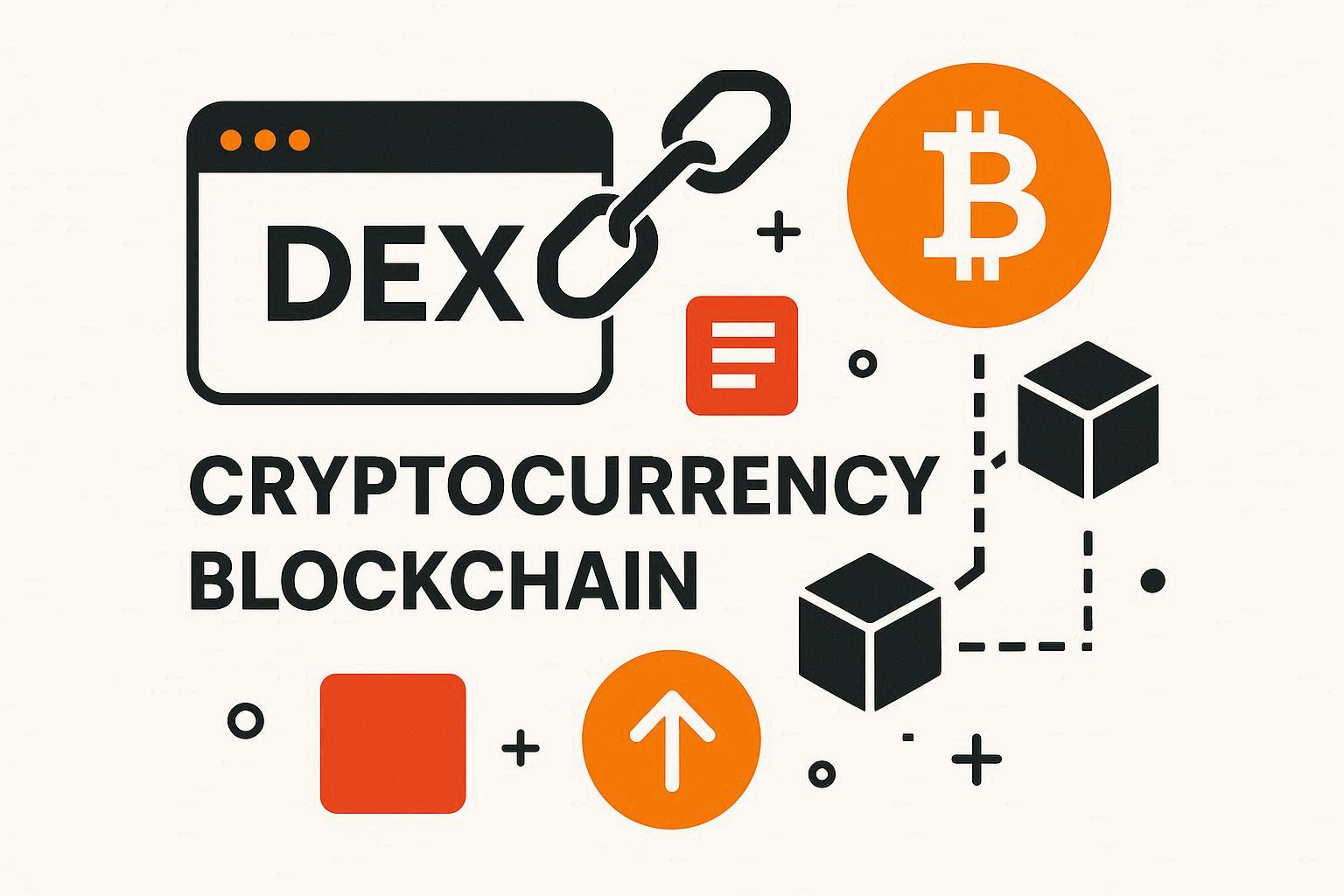
Your Ultimate Guide to Decentralized Exchanges (DEX)
A Decentralized Exchange or DEX, is a peer-to-peer process that allows you to trade your crypto coins and tokens in a decentralized frame of exchange. A DEX belongs to the rapidly growing <a href="https://resh.community/defi-a-free-financial-market-that-doesnt-sleep/">DeFi (Decentralized Finance)</a> sector.<br role="presentation" />
They are blockchain-based and they work entirely on automated algorithms that allow crypto asset-exchanges between users. In fact, they work without any link to a centralized authority. In other words, no intermediary party such as banks, brokers and payment processors officiates the transaction.
Smart contracts replaces central authorities that would usually make sure that the transaction processes happen smoothly. Simply put, it is basically an agreement in code that allows its parties to inter into an official contract with pre-determined terms and conditions. You can also read more about how smart contracts work in this article: What Is the "Smart" Factor of Smart Contracts?
		## How does a DEX allow you to trade?

	DEXs allow you to swap and exchange crypto for crypto that are in the same blockchain.  In other terms, it facilitates peer-to-peer trading by relying on automated smart contracts to execute trades without  an intermediary. For instance, UniSwap supports automated cryptocurrency token transactions on the Ethereum blockchain –alone- via smart contracts. However, SushiSwap supports transaction on various other blockchains than Ethereum. But, it still doesn't support blockchain interoperability.

		## Here are the obvious benefits of using a DEX

		### 1. They Protect your Anonymity

	By using a DEX, you don't share any of your KYC –Know Your Customer-information. In other terms, you don’t need to submit any of your personal information such as your security number, nor a profile picture, not even your name. Being anonymous is one of the greatest benefits of decentralized finance.

		### 2. They are Decentralized and Trustless

	As mentioned before, DEXs use smart contracts instead of mediators to keep track of the transactions flow. You don’t even need to use a cryptocurrency exchange platform such as Coinbase since you are relying on a smart contract which is written in code. Since these contracts are automated, you don’t have to worry about falling for any misleading party. This contract is also open source which allows you –and qualified developers- to revise the coding and to check for any possible errors or bugs.

		### 3. They are Fast

	Since these exchanges are decentralized, it means that you can achieve the process within seconds! They are much faster than any kind of centralized exchange. However, they require a negligible fee compared to centralized exchanges that take longer to process.

		## What are Decentralized Exchanges Swaps

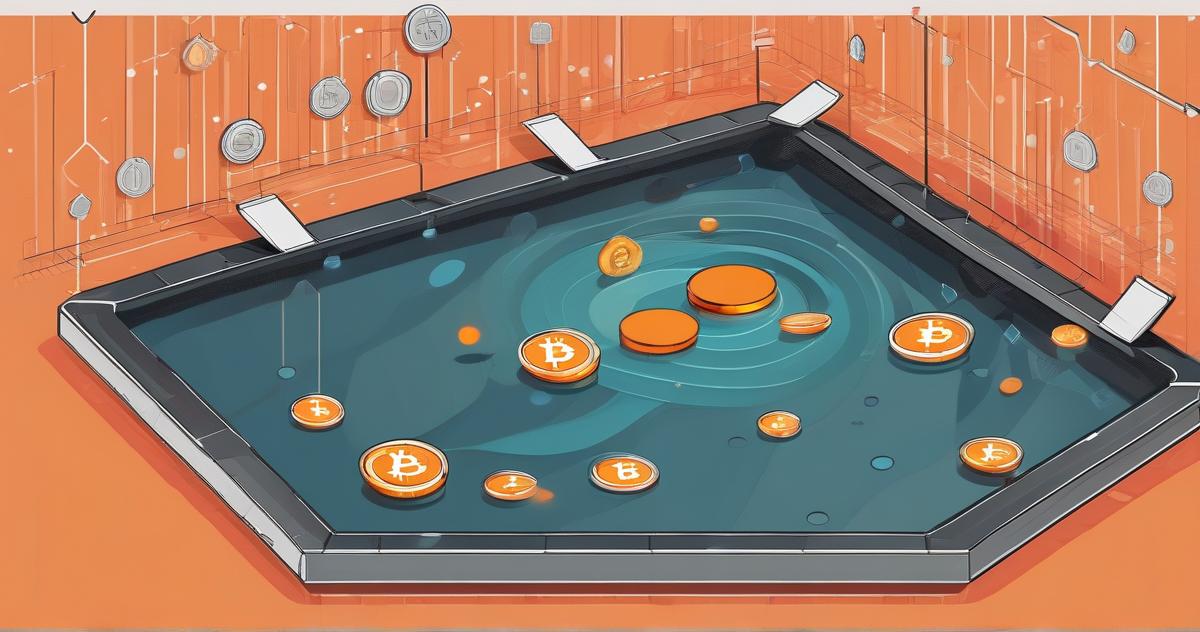
	These next generation decentralized exchanges do not rely on order books anymore to facilitate trades and to set prices. These platforms typically employ liquidity pool protocols to regulate asset pricing. By nature, the transactions are peer-to-peer. Thus, they are executed between the wallets of the users. This process is what we call “swap".
Here are the most popular swap platforms:
UniSwap: Through UniSwap, users can swap two Ethereum-built assets through an underlying liquidity pool. These highly liquid pools always ensure that UniSwap stays trustless. It is important to remember that on UniSwap, the trading fee is 0.3%.
Curve: Curve is a decentralized exchange that is similar to UniSwap and that uses a liquidity pool. However, Curve specifically facilitates stablecoin trading, which allows users to trade with low slippage and fees via an algorithm that optimizes trading pairs.
SushiSwap: SushiSwap matches UniSwap, and it started by offering liquidity providers a token, SUSHI.
DODO: DODO is also a liquidity protocol that employs its Proactive Market Maker (PMM) algorithm to provide adequate liquidity.
Gnosis: Gnosis pools its liquidity through a unique mechanism: ring trades. Ring trades actually function as order settlements that share liquidity across all orders and not just a single trading pair. This protocol is good for trading tokenized assets.
Comments